The Tabernacle and the Messiah
For over 400 years the Tabernacle was the place where the Lord communed with His people and taught them about the coming Messiah, even Jesus Christ.
Learn More
Seven free learning guides teach about the Tabernacle and its vessels, the High Priest, the sacrificial ordinances, and their symbolism of Jesus Christ and His mission, with videos from the Messages of Christ series to bring further insight and depth.
Learning Guides
Read these on your own or with your family. Each guide is a free PDF that draws out the meaning of a part of the Tabernacle and how it points to Jesus Christ.
The Lord teaches His children through symbols: simple, powerful likenesses found in the scriptures, ordinances, and the world around us. As we study with faith, symbols help eternal principles become personal, memorable, and transformative, bearing record of Christ in both temporal and spiritual ways.
Read the guide (PDF)From the Garden of Eden to modern temples, the Lord has taught His children through sacred spaces set apart for His presence. Mountains, tabernacles, and temples all follow the same pattern: ascending step by step toward holiness, guided by covenants, mediation, and divine ordinances.
Read the guide (PDF)God promised Israel that through His covenant they could become a holy nation and a kingdom of priests. Beginning with Abraham, priesthood authority was given to bless all nations, with symbols and ordinances pointing forward to Jesus Christ, the true High Priest, who would fully open the way back to God.
Read the guide (PDF)To receive the Lord in His sanctuary, Israel was organized around and focused on the Tabernacle. It mirrored His heavenly abode among them, and it was a shadow of the latter-day gathering of Israel around and in His holy house, teaching all who covenant with God who they are and to whom they belong.
Read the guide (PDF)The Tabernacle reveals a progression of holiness, transcending this world toward heavenly space through the Atonement. Each part is a shadow or type of the Savior's mission and atoning sacrifice, a reminder of God's covenants with Israel and His desire to have us return to Him.
Read the guide (PDF)The sacrificial ordinances provided atonement for the individual, the priest, and all of Israel. They were the Lord's way of teaching the process of repentance and the price of forgiveness, and they foreshadowed the great and final sacrifice that would be made for all mankind by the Son of God.
Read the guide (PDF)The shadows and types of the Tabernacle prepare all to become holy and enter the Lord's presence, possible only through the sacrifice of the Son of God foreshadowed in its ordinances. The Tabernacle reveals the power of covenants and the saving grace of the Lord's Plan of Salvation: the Way back to Him.
Read the guide (PDF)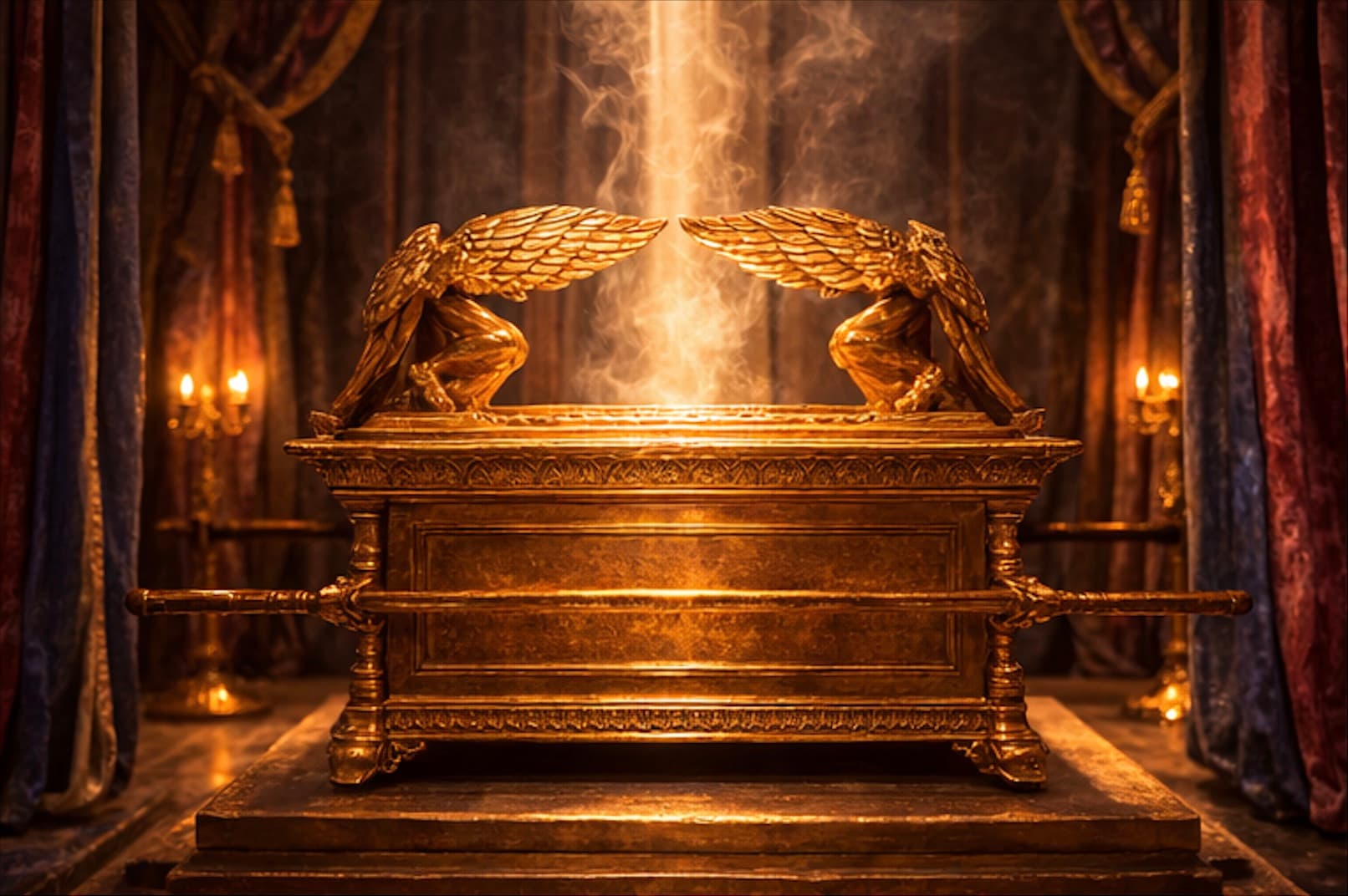
The Holy of Holies
At the heart of the Tabernacle stood the ark of the covenant, overshadowed by two cherubim above the mercy seat, the meeting place of God and man. The veil that concealed it was torn at the Savior's death, opening the way into His presence. Here the whole pattern finds its purpose: Christ, our great High Priest.
Video Series
Videos from the Messages of Christ series, produced and narrated by Daniel Smith, bring further insight and depth into the vessels of the Tabernacle, the High Priest, the sacrificial ordinances, and their symbolism pointing to Jesus Christ and His mission.
An overview of the Tabernacle of Moses: what it was, what it looked like, and the pattern it shares with Eden and the temple.
For over 400 years the Tabernacle was the place where the Lord communed with His people and taught them about the coming Messiah, even Jesus Christ.
Ever wonder what the Tabernacle of Moses might have looked like? Experience it like never before with this incredible 3D model.
Highlights of a full Tabernacle replica, giving a glimpse of what walking through the ancient sanctuary feels like.
Hidden within the Bible is a sacred blueprint: a lost paradise, the tragedy of exile, and the promise of return to God's presence through the Messiah.
The layout and symbolic progression found in both the ancient Tabernacle of Moses and modern temples.
The gate, the altar of sacrifice, and the bronze laver: the first steps toward the presence of God.
How the Tabernacle gate and courtyard relate to the Savior, with 3D models that show the Tabernacle like never before.
How the courtyard was constructed, as described in Exodus 27 and Exodus 38.
At the bronze altar Israel learned that only through the shedding of blood could sins be remitted, in sacrifices that pointed to the cross of Calvary.
How the altar of sacrifice was constructed, as described in Exodus 27 and Exodus 38.
Priests washed at the laver before serving in the Tabernacle. Its cleansing waters teach that only through the Savior can we become spiritually clean.
How the bronze laver was constructed, as described in Exodus 30 and Exodus 38.
The table of showbread, the golden menorah, and the altar of incense: light, sustenance, and prayer in the daily worship of the priests.
Each Sabbath the priests shared the twelve loaves in the Lord's presence. Jesus called Himself the bread of life: partake, and live forever.
How the table of showbread was constructed, as described in Exodus 25 and Exodus 37.
The menorah was the only source of light in the holy place, teaching us of our true source of light, even Jesus Christ.
How the golden menorah was constructed, as described in Exodus 25 and Exodus 37.
Morning and evening the priest burned incense before the veil, offering prayers for all Israel, a symbol of prayer joined to the Savior's sacrifice.
How the golden altar of incense was constructed, as described in Exodus 30 and Exodus 37.
Beyond the veil: the ark of the covenant, the mercy seat, and the one day each year the high priest entered.
The ark stood beyond the veil in the Holy of Holies, entered only on the Day of Atonement, symbolizing the Atonement of Jesus Christ that covers and blots out our sins.
How the Ark of the Covenant was constructed, as described in Exodus 25 and Exodus 37.
Yom Kippur, the most holy day of the Jewish calendar. No other ancient ritual comes closer to the full meaning of the Atonement of Jesus Christ.
A reenactment of the Day of Atonement (the scapegoat, the sacrifices, and the high priest entering the Holy of Holies), drawn directly from Leviticus 16.
The priests who served, their garments, and the Great High Priest they pointed to.
Why Jesus Christ is called the Great High Priest by Paul in the book of Hebrews, and by others.
The priestly garments as described in Exodus 28, including the clothing of the High Priest and of the ordinary priest.
Reserve a free guided tour and walk through the Tabernacle for yourself.